For Mario Gagliardi, design is the language to connect people with objects, services and values. This language transcends categories, and so he designs education systems as well as urban development concepts, digital interfaces as well as electronics, chairs as well as cosmetics. Sketching, writing, coding or working hands-on on the shop floor, he emphatically works with clients throughout the journey from concept to manufacturing.
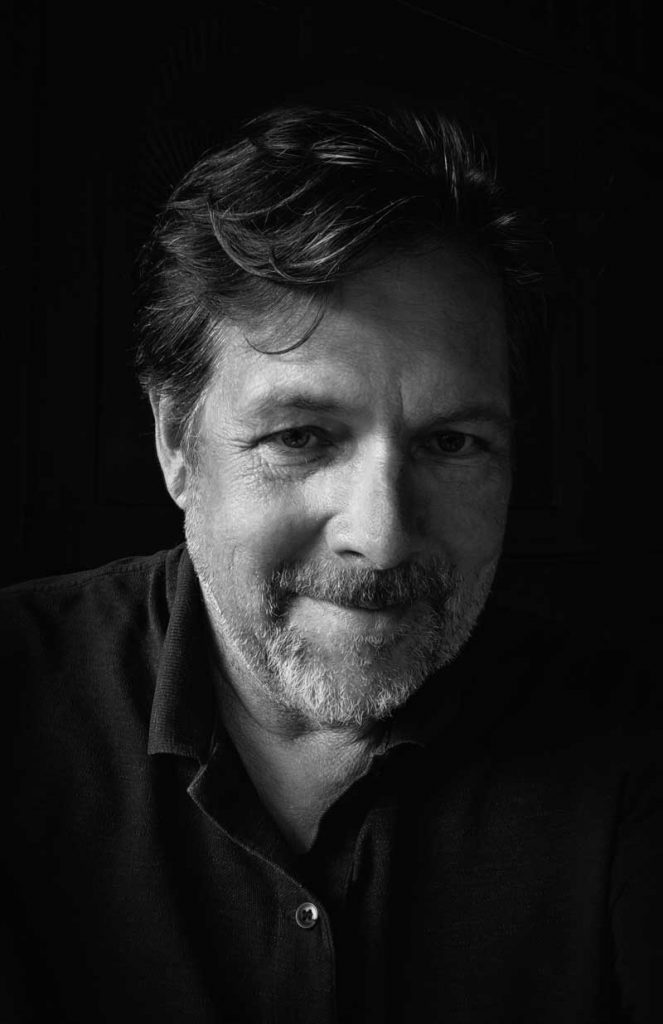
Having studied under legendary designers Alessandro Mendini and Richard Sapper, Mario started out as product designer at Philips. As advisor to the Korean Institute of Design Promotion, advisor to the Innovative Design Lab of Samsung and finally Chief Designer and Head of Design Strategy at LG in Seoul, he was instrumental in advancing design competences in South Korea. As advisor to the Austrian Ministry of Education and Culture, he created new approaches to learning. As CEO of Design at Qatar Foundation, he introduced innovative blueprints for city planning.
Mario taught as professor in Korea and Denmark and lectured in leading universities and congresses wordwide. His papers and articles have been published by institutions such as the European Academy of Design, the Design Management Institute, the Seoul Design Foundation, and the Danish Design Center.
Mario’s artistic vision started to form in his youth through avant-garde artists and teachers Susanne Wenger, Alfred Kolleritsch, Heinz Hartwig and Hartmut Urban. At the University of Applied Arts in Vienna, he studied under two of the most influential designers of the 20th century – Alessandro Mendini and Richard Sapper. Mario’s first design in the master class of Alessandro Mendini, his Philosophical Cupboard, was published in the authoritative book on legendary Italian design group Studio Alchimia, Alchimia: Contemporary Italian Design by Kazuko Sato (ISBN 3892680337).
After working as product designer at Philips in the Netherlands, he designed luxury home decor for prestigious department stores such as Takashimaya (Japan) and Bergdorf Goodman (USA).
Mario then consulted the Korea Institute of Design Promotion, the government organization of the Korean Ministry of Industry and Energy, to help founding the emerging Korean design sector. In Seoul, he also led the first master class of industrial design as professor at IDAS (International Design School for Advanced Studies), now part of Hongik University. Mario was advisor of the Innovative Design Lab of Samsung, where he helped to form ground-breaking future technology scenarios which shaped Samsung’s future design strategies.
As Chief Designer and Head of Design Strategy at the LG Headquarters in Seoul, he created one of Asia’s most successful luxury brands: The History of Whoo has become Korea’s top cosmetics brand, now generating a yearly revenue of US$ 1.4 billion in the Asian market and securing LG Household & Health Care a top spot among Asia’s luxury firms. Mario’s work was awarded the Trophy of Excellence by the Chairman of LG and the Good Design Mark of the Korean Republic. With the acclaimed monthly article series “Observations On Design” for Korea’s leading design magazine Monthly Design, he continued to influence the development of the Korean design sector.
Upon returning to Europe, Mario became advisor of the Austrian Federal Ministry of Education, Science and Culture, where he developed a digital education ecosystem that helped to increase the use of e-learning in Austria from 10% to over 90% within 5 years. For his work, he received a certificate of commendation for outstanding service by the Federal Minister. In Austria, he also inspired the design efforts of glass crystal manufacturer Swarovski to help defining its global presence. After joining a workshop by legendary designer Andrea Branzi at Domus Academy in Milan, he moved to London and graduated with an MBA with Merit at the University of Westminster.
As professor at Aalborg University (Denmark), he developed and taught digital experience design and generative design, an innovative approach that merged design and technology to soon become a norm in user-centered design.
In 2008, he was appointed by Her Highness Sheikha Moza bint Nasser as CEO at Qatar Foundation in Doha, where he laid the groundwork for the design of Msheireb, Doha’s urban regeneration project and the world’s most ecological city center. He also worked with prominent international architects to develop Design Zone, a visionary architectural and technical blueprint for sustainable, energy-independent and zero-emission communities in desert climates.
His theoretical contributions to design, innovation and strategy include the cultural analysis framework for branding and design (Design Management Review, 2001), metaphors of brand management and touch-points for brands (Identico, 2005), the concurrence of design integration and economic development stages (Danish Design Center, 2005), and the first definitions of experience design and consumers as co-creators (Danish Designers, 2007).
Mario embraced digital innovation early on. In 1989, he was awarded the design prize of architecture magazine Domus with the first digitally designed textiles for Italy’s prestigious textile manufacturer Somma. In 1990, he was awarded the first three prizes at the Austrian Post Shop design competition and was selected for the Austrian national design award. With the paper Analyzing the Digital, published by the European Academy of Design, Mario defined the mechanisms and effects of social media in relation to the humanities. (The Design Journal, 2017). Since 2017, Mario works with Artificial Intelligence and 3D printing to research and enhance the design process.
Mario is founder of penccil, the ethical digital sharing platform for global creatives. It’s members include museums such as MoMa or Centre Pompidou and universities including Columbia, Harvard, Stanford, and Yale. He is also founder of Mario & Casa, bringing contemporary design and artisanal culture together for cultural impact.
He was fellow of the Royal Society of Arts, member of the Industrial Designers Society of America and member of the Design Management Institute.
Mario conducted workshops at institutions such as the PDMA (Product Development and Management Association, London), Hong Kong Design Centre (Hong Kong), Mousharaka: Icograda Design Week (Doha) and German Design Council, delivered keynotes at Innotown (Norway), the Era 05 World Design Congress (Denmark), the International Council of Design Week, the European Academy of Design Conference (Rome), and Vienna Art Week 2018. He spoke at the DNA Paris Design Conference 2019, was member of the jury at the DNA Paris Design Awards 2020, and spoke at Dubai Design Week 2022. He lectured at leading universities including London Business School (London), University for the Creative Arts (UK), Sapienza University (Rome), Bosphorus University (Istanbul) and Tsinghua University (Beijing).